
Seasonal & Weight
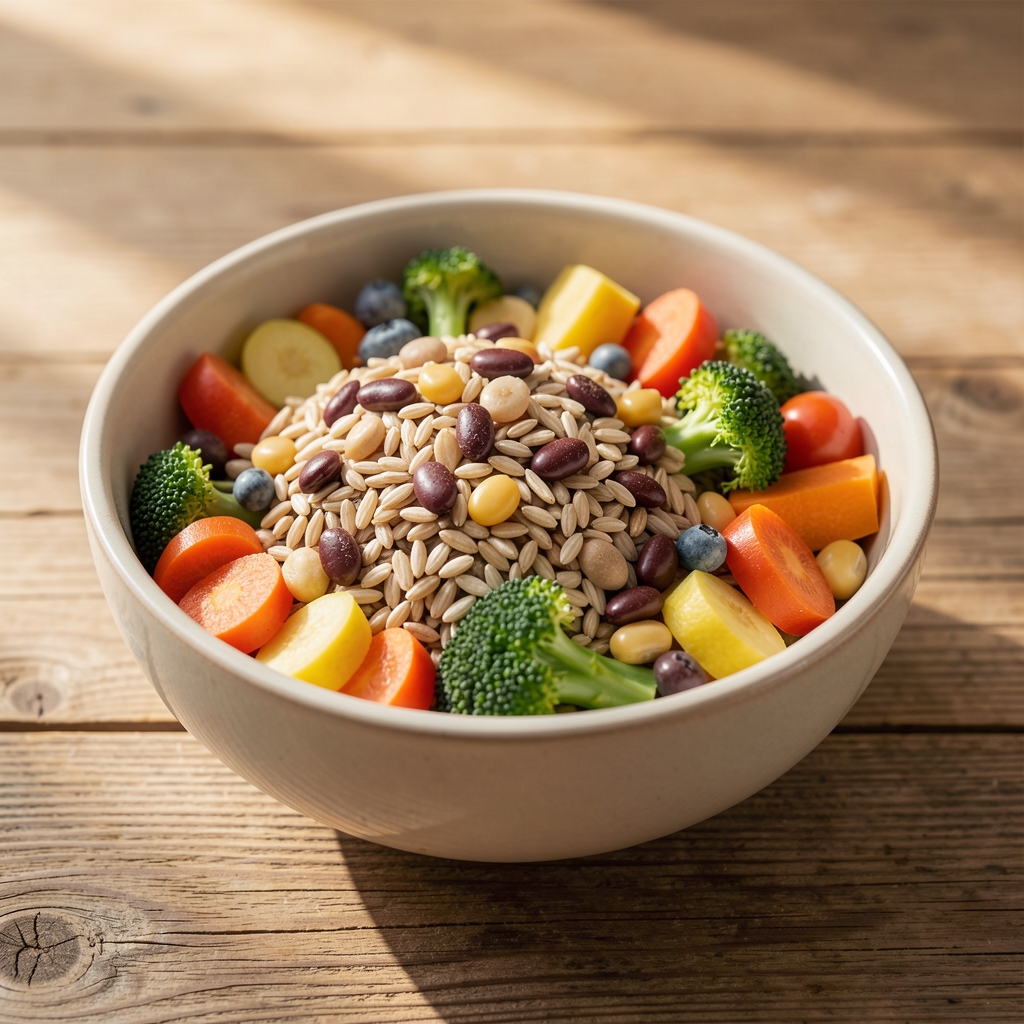
When the weekly shopping list is arranged by whole food categories — grains, legumes, root vegetables, leafy greens, fruit, eggs — rather than by recipe or convenience, a structural shift in how the kitchen operates tends to follow. Meals become compositions assembled from available components. The cook becomes less reactive to packaging and more attentive to what has already been bought. Portions, in this context, tend to stabilise without deliberate counting.

Recipe-led shopping introduces a recurring pattern: items are purchased in specific quantities for specific dishes, and anything left over from a recipe either spoils or is discarded. The cook's attention narrows to the requirements of the dish. Nutritional variety, by this logic, is only as wide as the variety of recipes in rotation — which, for most households, covers a relatively small repertoire.
Ingredient-led shopping operates differently. When the list includes a category — "root vegetables" — rather than a specific item, the shopper is drawn toward whatever is available, in season, and in proportion to the week ahead. The result is a pantry that reflects broader nutritional coverage: different fibre sources, different micronutrient profiles, different textures and cooking methods. This breadth is not planned explicitly; it emerges from the structural decision to shop by category rather than by dish.
Nutritional research on dietary variety consistently identifies breadth of food groups as a relevant factor in sustained weight awareness. A 2023 review in the British Journal of Nutrition noted that households maintaining higher variety across plant food categories tended to show more stable energy intake across weekly periods than households with narrower food ranges, regardless of absolute calorie targets. The mechanism proposed was not willpower but structural: more varied pantry contents produce more varied meal compositions, which in turn produce more variable satiety signals — reducing the frequency of out-of-pattern snacking.
The role of whole grains in a week arranged around whole foods extends beyond their direct nutritional contribution. Whole grains — oats, brown rice, barley, farro, rye — require preparation time and produce meals of a particular density. A breakfast of overnight oats prepared the evening before occupies a different position in the day than a comparable-calorie cereal: it is slower to eat, more filling, and less likely to provoke early hunger. This is not a statement about which is nutritionally superior, but about how the structural properties of the food shape the eating pattern around it.
The observation this publication returns to, across multiple field records, is that the proportion of whole grains to refined carbohydrates in a given week correlates loosely with how structured or unstructured the meals of that week feel. Weeks dominated by whole grains tend to produce a steadier rhythm: breakfast, midday meal, evening meal, with less need for intermediate snacking. Weeks dominated by refined carbohydrates — even at similar caloric values — tend to produce less predictable appetite patterns and more frequent unplanned eating.
"The proportion of whole grains in a week does not determine its caloric value — it tends to determine its shape. The week with more oats and barley is more predictable. The week with more white bread and instant noodles is less so."
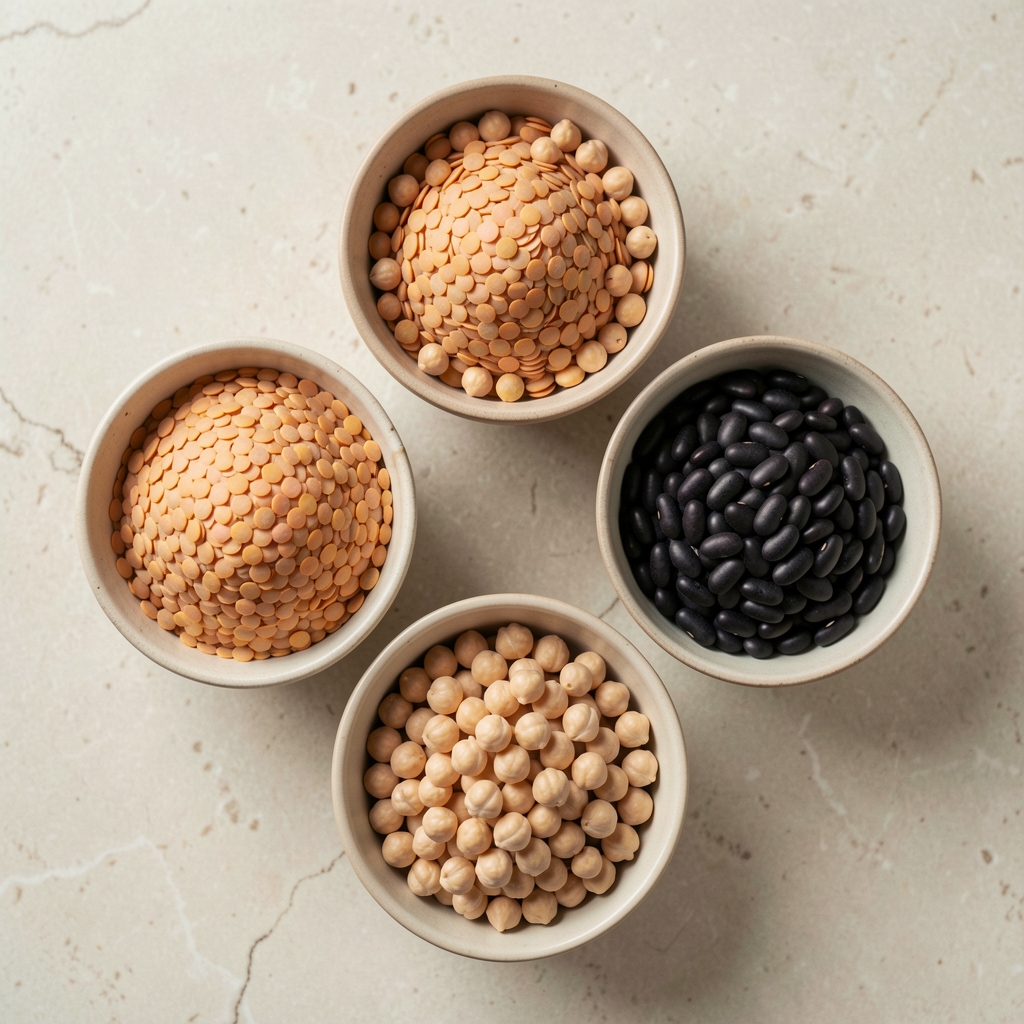
Legumes — lentils, chickpeas, black beans, butter beans, split peas — occupy a distinctive position in the whole-foods week. They are slow to digest, contributing a sustained sense of fullness that extends noticeably beyond the meal. They are also among the most cost-effective whole food sources available in UK markets, which makes their inclusion a practical rather than aspirational choice.
The editorial team's observation across six months of food journal records — contributed by four individuals following ingredient-led shopping approaches — was consistent: weeks that included legumes in at least three of seven evening meals produced noticeably fewer instances of late-evening appetite, compared with weeks in which legumes appeared once or not at all. The self-reported experience was not of deprivation but of a different quality of fullness — one that required less management.
From a nutritional perspective, the fibre content of legumes — both soluble and insoluble — slows gastric emptying and contributes to what researchers describe as a sustained satiety response. The practical implication for the home cook is straightforward: incorporating lentils, beans, or chickpeas into three or more weekly meals is one of the more structurally reliable adjustments available to those seeking to stabilise their appetite rhythm without restricting food variety.
One of the consistent observations in nutritionist field practice concerns volume: large quantities of leafy greens — kale, spinach, chard, rocket, watercress, romaine — add substantial bulk to a meal without proportionally increasing its caloric density. This is not a nutritional hack but a structural property of these foods: they contain significant water and fibre relative to their energy content.
The practical consequence is a plate that appears and feels substantial. The visual and tactile experience of eating a full plate is itself a signal in the satiety process. Research on portion perception suggests that the visual volume of food on a plate influences how satisfied an individual reports feeling after eating, independent of the actual caloric content of the meal. Leafy greens, by increasing visible volume without substantially increasing calories, make use of this perceptual dimension of eating.
In the food journals reviewed for this article, weeks that incorporated leafy greens at both the midday and evening meal showed the most consistent reduction in between-meal snacking. The mechanism appears to be partly physical — the bulk of digesting high-fibre leaves — and partly perceptual, in the way described above.
Fruit occupies an interesting position in the whole-foods week because its role varies substantially by timing. Fruit consumed at breakfast — typically alongside a grain or protein source — contributes natural sugars within a broader nutritional context that slows their absorption. Fruit consumed as a standalone afternoon snack performs a different function: it addresses mid-afternoon energy dips with a combination of natural sugars, water, and fibre that provides a rapid but not excessive energy lift.
The seasonal dimension adds a further layer. The variety of fruit available in UK markets shifts noticeably across the year: winter months bring citrus and stored apples; spring extends to softer fruits; summer offers berries, stone fruits, and an abundance of variety; autumn returns to harder fruits and pears. Following these seasonal cycles introduces a natural rotation of micronutrients across the year, as different fruits contribute different vitamin and antioxidant profiles.
The editorial team does not advocate for any particular fruit or quantity — the observation is simply that households that include seasonal fruit in the afternoon window tend to report fewer instances of reaching for processed snack foods during that period, compared with households in which the afternoon passes without a food event. Whether the fruit itself suppresses the snack impulse, or whether the habit of preparing and eating fruit displaces the snack habit, is less clear from the journal records reviewed.
One of the less-discussed advantages of cooking primarily from whole food ingredients is the relationship it creates between the cook and portion size. When a meal is assembled from components — a measured cup of grains, a portion of protein, a handful of greens, a spoonful of olive oil — the cook has a direct awareness of what the meal contains. This awareness is structural, not cognitive: it does not require calorie counting or nutritional knowledge.
By contrast, meals based on processed or pre-prepared components offer less direct information about their contents. A ready meal labelled as a single serving may or may not correspond to the appetite of the person eating it. The packaging has made a portion decision on the consumer's behalf, with commercial rather than nutritional priorities driving that decision.
The food journals reviewed for this article showed a consistent pattern: contributors who cooked primarily from whole food ingredients reported higher confidence in identifying when they were full and when they were eating beyond appetite. Contributors who relied more heavily on processed or pre-prepared foods reported less clarity on the same question. This is an observational finding, not a controlled study, but it aligns with the existing literature on cooking frequency and dietary awareness.
None of the above constitutes a directive. The whole-foods week is not a programme with a defined outcome. It is, rather, an organisational approach to the kitchen — one that tends, across the range of records examined, to produce a more predictable, varied, and appetite-responsive pattern of eating. The outcomes are structural, emerging from how food is bought and prepared, rather than from how it is counted or restricted.

Eleanor Whitfield is the founding editor of Elarovan Letters. Her editorial work draws on a background in nutrition science and food writing, with particular interest in the practical conditions that shape everyday eating habits — shopping patterns, cooking frequency, meal timing, and the structural logic of the weekly kitchen.
More from Eleanor →